
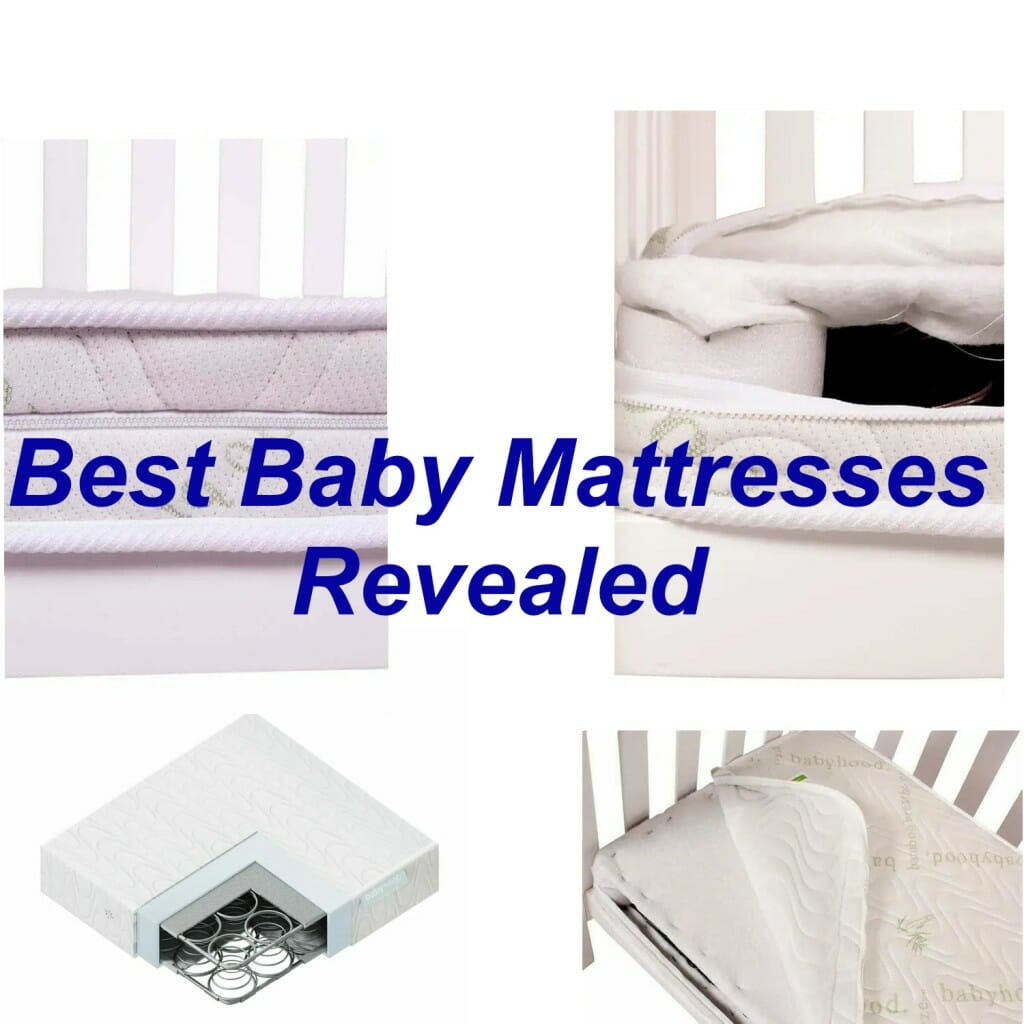
Best Baby Mattress Revealed
Choosing the best baby mattress can feel confusing. This guide breaks down the key factors that matter most for safe sleep and practical day to day use in Australia, so you can make a confident, informed decision for your baby.
When buying a cot, bassinet or cradle, remember our golden rule: the mattress decision is just as important as the furniture-because your baby spends so much time on it, especially in the first year.
Why the Mattress Matters More Than the Cot
Newborns sleep often and grow rapidly in the first 12 months. A good, firm, flat mattress supports healthy development and helps maintain a safer sleep environment. This is why the mattress you choose is critical-not just the cot or bassinet.
This is why the mattress you choose is more important than the crib.
Firm vs Soft: What Do Australian Guidelines Say?
Experts recommend a firm, flat, even sleep surface for babies (0–12 months). A mattress that is too soft can conform to the shape of your baby’s head/face and increase the risk of suffocation. In Australia, AS/NZS 8811.1:2013 provides a test method for firmness of infant sleep surfaces. While it’s a non mandatory standard, it’s widely used as a benchmark for safer firmness.
- Look for products tested to AS/NZS 8811.1:2013 (sleep surface firmness test).
- Follow safe sleep guidance: firm, flat surface; no pillows, quilts, bumpers or soft toys in the sleep space.
Safe Fit & Correct Sizing (Cots, Bassinets & Cradles)
Always match the mattress to the product’s recommended size. For cots, Australian guidance expects:
- Snug fit: no more than a ~20 mm gap between mattress and the sides/ends of the cot.
- Safe depth: with the base in the lowest position, there should be at least ~50 cm from the top of the mattress to the top of the lowest cot side; at the upper base position, at least ~30 cm.
- Use a well fitting waterproof protector that doesn’t bunch or alter the mattress firmness.
Materials: Pros & Cons (Practical, Evidence Led)
Foam Mattresses
We generally do not recommend foam for everyday infant use because many foams are harder to keep dry and clean, can trap moisture, may be slower to dry-practical issues that can lead to odour or mould if not managed carefully. If you do consider foam, choose firm, low VOC options from reputable brands and ensure a tight, breathable cover and protector.
Fibre, Innerspring & Latex
- Synthetic fibre (polyester) cores: Typically lightweight, good airflow designs, easy care removable covers available.
- Innerspring (Bonnell unit + border wire): Durable support and edge integrity; look for tempered steel border for side support when older babies pull up to stand.
- Latex (firm infant grade): Can offer even support; ensure firm infant specification and a snug, breathable, removable cover.


Ergonomic Support & Edge Stability
Quality innerspring mattresses often use Bonnell springs joined and reinforced by a border wire for shape retention and edge support. This can help when babies start standing-mattress edges that hold their shape reduce the chance of feet slipping between slats as weight shifts near the cot side. Whatever the core, choose a mattress that is consistently firm across the surface and edges.
Hygiene & Maintenance
- Wash bedding weekly (sooner if soiled).
- Sun dry where possible; sunlight helps freshen and dry thoroughly.
- Choose a mattress with a removable, washable cover and use a waterproof, breathable protector to protect the core.
Second Hand Mattresses-Proceed with Caution
We recommend a new mattress for each baby. Older mattresses may have lost firmness or harbour allergens/contaminants. If you consider second hand, confirm it remains very firm, clean, free from stains or odour, fits your cot with no gaps. When in doubt, choose new.
Quick Comparison: Common Baby Mattress Options
| Type | Firmness Potential | Edge Support | Cleaning & Care | Breathability | Typical Cover | Best For |
|---|---|---|---|---|---|---|
| Foam (infant grade) | Varies (ensure firm) | Moderate | Needs care to keep dry; slower to dry if saturated | Varies by design | Poly/cotton, knitted or laminated | Budget options with strict focus on firmness and care |
| Synthetic Fibre Core | Consistently firm (model dependent) | Moderate | Generally easy; removable covers common | Often good airflow designs | Removable, washable (poly/cotton) | Low maintenance everyday use |
| Innerspring (Bonnell + border) | Firm, supportive | Strong (with tempered border) | Easy; cover and protector do the work | Good with ventilated layers | Quilted poly/cotton or bamboo blends | Long term use, robust edge stability |
| Latex (infant grade, firm) | Firm, even support | Good (model dependent) | Removable cover recommended | Good ventilation in perforated designs | Removable, washable (often bamboo/cotton blends) | Consistent, even surface feel |
How to Check Firmness at Home
- Press your flat hand near the centre and edges: the surface should spring back quickly and not “hug” your hand.
- Lay a light, flat object (e.g., a small book) and observe minimal indentation.
- If the surface visibly dips or feels spongy under light pressure, it’s likely too soft.
Buying Checklist
- Firm, flat, even surface (reference: AS/NZS 8811.1:2013 test method for firmness).
- Snug fit in your cot/bassinet (minimal gap; check your cot’s base label for the correct size).
- Removable, washable cover + waterproof breathable protector.
- Durable construction (e.g., innerspring with border wire for edge stability) or firm infant grade fibre/latex core.
- From a reputable Australian retailer with expert advice and after sales support.
Standards & Guidance (Australia)
For safer infant sleep, refer to these authoritative Australian resources:
- Product Safety Australia – Cots & sleep safety
- Red Nose – Safe Sleeping
- AS/NZS 8811.1:2013 – Sleep surface firmness (test method)
- ACCC/Product Safety – Babies & Kids safety hub
FAQs
How firm should a baby mattress be?
It should be clearly firm and flat. The surface should rebound quickly when pressed and not conform to your baby’s head or face. AS/NZS 8811.1:2013 provides a test method many brands follow to assess firmness.
What size gap is acceptable between the mattress and cot?
Aim for no more than ~20 mm at the sides/ends to prevent entrapment risks. Always match your cot’s labelled mattress dimensions.
When can my baby use a pillow?
Avoid pillows and soft bedding in the cot. Follow Red Nose guidance for a firm, flat surface with only a fitted sheet for babies under 12 months.
Is a second hand mattress safe?
We recommend a new mattress. If considering second hand, ensure it remains very firm, clean, odour free, fits your cot with minimal gaps. When in doubt, choose new.
Summary
Choose a brand new, firm mattress that fits snugly in your cot/bassinet, with a removable cover and waterproof breathable protector. Consider durable cores like innerspring (Bonnell + border), firm infant grade fibre, firm infant grade latex. Always follow Australian safe sleep guidance.
At Bubs n Grubs, our baby mattresses are hand selected for firmness, fit and practicality. Our trained team can help you match the right mattress to your cot and your baby’s stage.
Ready to compare options? Explore our range of Baby Mattresses or talk to our specialists.
Safety Disclaimer
This content is general information for Australia. Always follow the product manual and relevant Australian Standards, consult a qualified professional (GP/child health nurse) for advice specific to your child. Ensure the mattress is firm, flat and fits your cot or bassinet as per the manufacturer’s guidance.
About the Author
Frank is a founding owner of Bubs n Grubs. He is also the sole author of the Bubs n Grubs Baby Blog. He has been personally evaluating baby products & testing them before offering them to our customers since 2009. In addition, he is consistently giving manufacturer’s feedback & product development advice, reviewing & getting customer feedback. He has been doing this since the business started in 2009. He is proud to be one of the rare baby store owners in Australia who regularly engages with customers in his store. Frank values the constant feedback and regularly seeks it out. He has been featured on the Morning Show & the Today Show on Channel 7 and Channel 9 and is a recognised expert in baby products as a result.

The Car Seat Mistake That Almost Cost One Brisbane Mum a New Car
A Brisbane mum with three young children came to us seeking a second opinion after being told she would likely need to buy a larger vehicle to fit three child restraints safely. The problem was she couldn’t afford one. Like many Australian families, she was already feeling the pressure of rising living costs. The thought
Read more...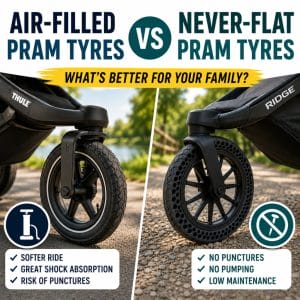
Air-Filled vs Never-Flat Pram Tyres: What’s Better for Australian Families?
Air-Filled vs Never-Flat Pram Tyres – What’s Better for Your Family? Most parents spend time comparing suspension, fold size and basket space when choosing a pram, but very few think about the tyres until after they start using it every day. The type of tyres your pram uses can make a huge difference to: Ride
Read more...
Jogging Pram vs All Terrain Pram: What’s the Difference?
Jogging Pram vs All Terrain Pram: What’s the Difference? Many parents searching for an all terrain pram eventually come across jogging prams and assume they are exactly the same thing. While both are designed to handle rougher terrain better than standard strollers, there are some important differences that can completely change which option is best
Read more...
What To Look For In An All Terrain Pram
What To Look For In An All Terrain Pram Choosing the right all terrain pram can make everyday life much easier, especially if you regularly walk on gravel paths, grass, parks, uneven footpaths or outdoor trails. Some prams are designed mainly for smooth shopping centre floors, while others are built to handle rougher terrain, jogging
Read more...








Leave a comment