
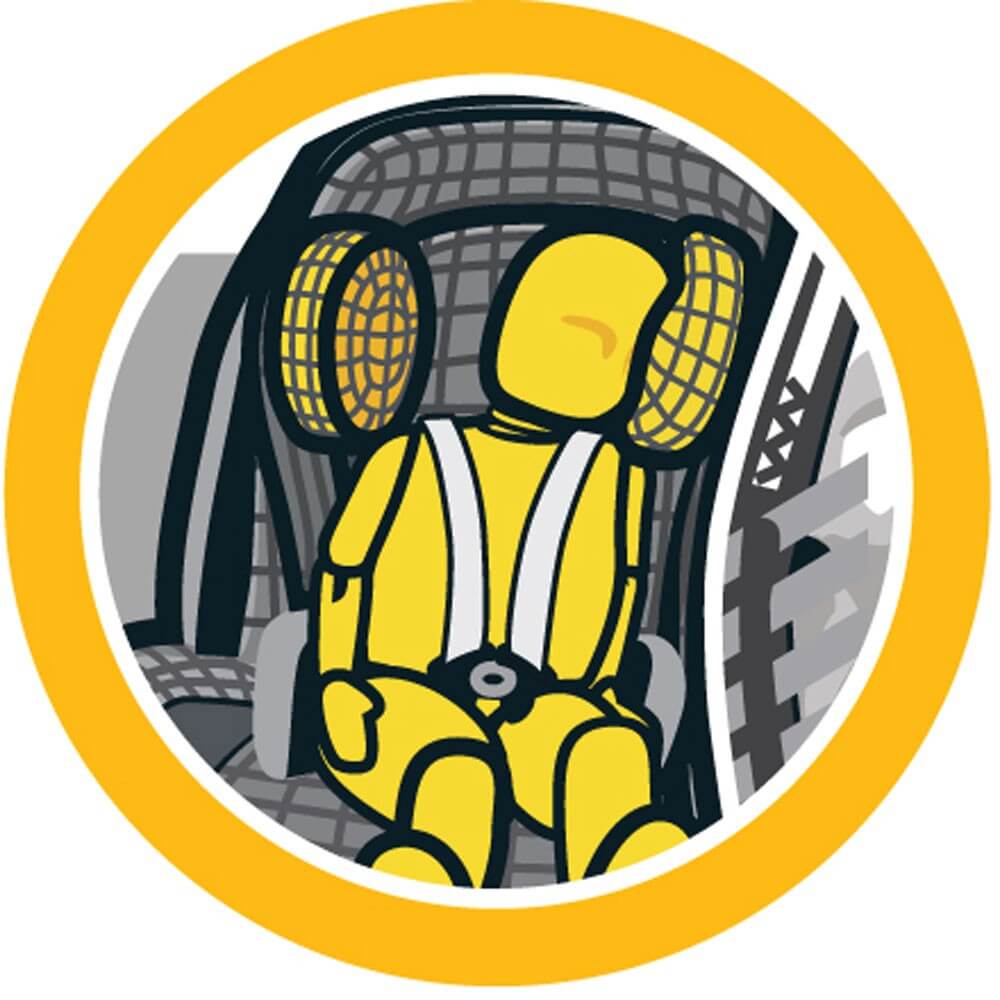
Air Protect
Baby Car Seats & Side Impact Protection: What Parents Should Know
Why Choosing the Right Baby Car Seat Matters in Australia
In Australia, baby car seats are mandatory — but not all child restraints offer the same approach to side-impact protection, installation usability or long-term practicality.
No parent likes thinking about the possibility of a collision. At the same time, every family wants to do everything possible to better protect their child while travelling.
Side-impact collisions are particularly dangerous for children. Research published by the Australian Government found they account for over one-third of child crash fatalities, with many involving serious head injuries.
Vehicle airbags are designed primarily around adult seating positions and adult body geometry — not small children.
Research and real-world crash analysis continue to reinforce how important proper child restraint design, side-impact management and correct installation are during a collision.
That is why we spend so much time evaluating child restraints, understanding side-impact technologies and helping families choose restraints that suit both their child and vehicle properly.
Why Side-Impact Protection Matters
Many Australian parents focus heavily on harness stages and rear-facing duration, however side-impact protection is equally important.
During a side-impact collision, there is often significantly less space between the child restraint and the source of impact compared with a frontal collision.
That is why many modern child restraints now include specialised side-impact management technologies designed to help reduce forces around the head and torso.
At the same time, side-impact protection is only one part of overall child restraint safety.
Correct installation, proper harness adjustment, rear-facing duration and vehicle compatibility all continue to play major roles in real-world protection.
What Most Parents Don’t Realise
Many parents assume advanced side-impact technology automatically makes one restraint “the safest”.
In reality, even the most advanced child restraint technology can be compromised by:
- Loose installation
- Incorrect harness adjustment
- Poor vehicle fitment
- Incorrect recline angle
- Incorrect top tether routing
We regularly see families surprised by how much vehicle size, front-seat legroom and rear-seat layout affect real-world usability.
For many families, a restraint that fits the vehicle properly and is easy to use every day can be just as important as additional side-impact features.
Air Protect Technology Explained
Air Protect is one of the best-known side-impact technologies currently available in selected Australian child restraints.
Developed through collaboration between Dorel and the Crash Test Center at Kettering University in Michigan, USA, Air Protect is designed to help manage impact forces around a child’s head during certain side-impact crash scenarios.
The system works by using controlled air-release technology inside the head protection wings to cushion and reduce impact energy transfer.
Maxi-Cosi, Mothers Choice and Safety 1st have incorporated variations of this technology into selected Australian child restraints.
How Air Protect Goes Beyond Minimum Standards
Australian child restraints must comply with AS/NZS 1754, which is already considered one of the strictest child restraint standards globally.
Technologies such as Air Protect are designed to go beyond baseline compliance by focusing specifically on additional side-impact management strategies.
Reference: IGC Dorel Data on file. Dorel/Kettering Side Impact Method.
Watch Ella’s Story below to learn more about Air Protect technology:
What Is GCell Technology?
GCell is the next generation of side-impact technology found in selected Maxi-Cosi child restraints.
Inspired by honeycomb structures found in nature, GCell uses thermoplastic elastomer structures integrated into the side shell to help absorb and redirect crash energy.
- Hexagonal crumple-zone structures designed to help absorb side-impact forces
- Full side shell integration
- Designed to maintain structural integrity across varied temperatures
- Slimmer designs for easier multi-seat configurations
- Works alongside Air Protect head protection systems on selected models
For many families, these slimmer shell designs also make it easier to fit multiple child restraints across the rear seat.
Side Impact Protection Comparison
| Feature | Air Protect | GCell | Extended Side Wings | Compact Shell Designs |
|---|---|---|---|---|
| Primary Focus | Head impact management | Energy absorption and redirection | Additional side coverage | Vehicle fitment practicality |
| Technology Type | Controlled air-release system | Honeycomb-inspired elastomer structure | Physical shell structure | Reduced shell width and footprint |
| May Help With | Head protection management | Side-impact energy management | Additional torso/head coverage | Three-across and smaller vehicle setups |
| Common Parent Benefit | Added reassurance around head area | Slimmer shell designs on some models | Extra visible side coverage | Better vehicle compatibility |
| Still Requires Correct Installation | ✔ | ✔ | ✔ | ✔ |
Correct Installation Still Matters
Even the most advanced child restraint technology can perform poorly if the restraint is installed incorrectly.
Loose installations, incorrect tether routing, twisted harnesses and poor recline angles remain some of the most common problems we continue to see in-store.
Many families are surprised how different vehicle layouts can affect installation quality and everyday usability.
If you are unsure whether your child restraint is fitted correctly, our team can also help guide families through proper setup, tether routing and harness adjustment.
Choosing the Right Car Seat for Your Vehicle
Not every child restraint suits every vehicle.
Things like rear-seat space, front-seat legroom, three-across layouts and compact fitment all affect which restraint works best in real-world use.
That is why we always recommend choosing a restraint based not only on safety features, but also:
- Your vehicle size
- Your child’s stage and growth
- Your family plans
- Rear-facing goals
- Ease of daily use
Many families initially focus only on features shown on the product box, however practical fitment inside your actual vehicle often becomes the deciding factor long term.
Our finder tool can help narrow down suitable options based on your family’s setup and long-term needs.
Summary
When it comes to child restraint safety, meeting the standard is only the beginning.
Technologies such as Air Protect and GCell are designed to help improve side-impact management, however correct fit, proper installation and vehicle compatibility remain equally important.
That’s why we continue focusing on child restraints that combine:
- Strong side-impact protection concepts
- Practical everyday usability
- Good vehicle compatibility
- Extended rear-facing support
- Clear installation systems
Right now, we have excellent offers available on baby car seats featuring Air Protect and GCell technology.
Standards & Guidance (Australia)
- Australian Government – Side Impact Safety Research
- Product Safety Australia – Child Car Seats
- Queensland Government – Child Restraints
- Kidsafe Queensland
FAQs
Are all Australian baby car seats tested to the same standard?
Australian child restraints must comply with AS/NZS 1754, however brands may use different approaches to side-impact protection, installation systems and comfort features.
What is Air Protect technology?
Air Protect is a side-impact protection technology designed to help manage forces around a child’s head during certain side-impact collision scenarios.
What is GCell technology?
GCell is a side-impact management system using honeycomb-inspired energy absorbing structures integrated into selected Maxi-Cosi child restraints.
Can advanced safety technology replace correct installation?
No. Proper installation, tether routing, harness adjustment and correct fit remain critical parts of child restraint safety.
Can you help test fit a child restraint in my car?
Yes. We regularly help families check vehicle fitment, front-seat space and child restraint compatibility in-store.
About the Author
Frank is a founding owner of Bubs n Grubs. He is the sole author of the Bubs n Grubs Baby Blog. He has been personally evaluating baby products & testing them before offering them to customers since 2009. He regularly provides manufacturers with product feedback and development advice. Frank is ACRI-trained in child restraint fitting and has been featured on The Morning Show and The Today Show as a recognised expert in baby products.
Disclaimer: While technologies such as Air Protect and GCell are designed to improve side-impact management, no child restraint can prevent all injuries in every collision scenario. Always follow manufacturer installation instructions and regularly check fitment.
- Australian Government Department of Infrastructure – Side Impact Safety for Children.
- IGC Dorel Internal Safety Data.
- Kettering University Crash Test Data – Dorel Collaboration Research.

The Car Seat Mistake That Almost Cost One Brisbane Mum a New Car
A Brisbane mum with three young children came to us seeking a second opinion after being told she would likely need to buy a larger vehicle to fit three child restraints safely. The problem was she couldn’t afford one. Like many Australian families, she was already feeling the pressure of rising living costs. The thought
Read more...
Air-Filled vs Never-Flat Pram Tyres: What’s Better for Australian Families?
Air-Filled vs Never-Flat Pram Tyres – What’s Better for Your Family? Most parents spend time comparing suspension, fold size and basket space when choosing a pram, but very few think about the tyres until after they start using it every day. The type of tyres your pram uses can make a huge difference to: Ride
Read more...
Jogging Pram vs All Terrain Pram: What’s the Difference?
Jogging Pram vs All Terrain Pram: What’s the Difference? Many parents searching for an all terrain pram eventually come across jogging prams and assume they are exactly the same thing. While both are designed to handle rougher terrain better than standard strollers, there are some important differences that can completely change which option is best
Read more...
What To Look For In An All Terrain Pram
What To Look For In An All Terrain Pram Choosing the right all terrain pram can make everyday life much easier, especially if you regularly walk on gravel paths, grass, parks, uneven footpaths or outdoor trails. Some prams are designed mainly for smooth shopping centre floors, while others are built to handle rougher terrain, jogging
Read more...






Leave a comment