

Child Restraints Guide Australia: What Parents Need to Know
I decided to put together this Child Restraints Guide because of the huge number of questions we are asked every week in-store by Australian parents.
Choosing the right child restraint can feel overwhelming, especially for first-time families trying to balance safety, vehicle space, long-term value and ease of everyday use.
As specialists in child restraints, capsules and car seat fitting, we’ll cover the most common questions we hear daily — from basic safety concerns through to more advanced topics like installation, rear-facing duration and vehicle compatibility.
Why Choosing the Right Child Restraint Matters
A child restraint is one of the most important safety products you will buy for your child.
Besides being legally required in Australia, a correctly fitted child restraint significantly improves your child’s protection during a collision.
Australian child restraints must comply with AS/NZS 1754, however correct installation, proper harness adjustment and choosing the right restraint stage are equally important.
The safest restraint is the one that:
- Fits your child correctly
- Fits your vehicle properly
- Can be installed correctly every time
- Is practical enough for everyday family use
Types of Child Restraints in Australia
| Type | Typical Age Range | Best For | Key Advantage | Important Consideration |
|---|---|---|---|---|
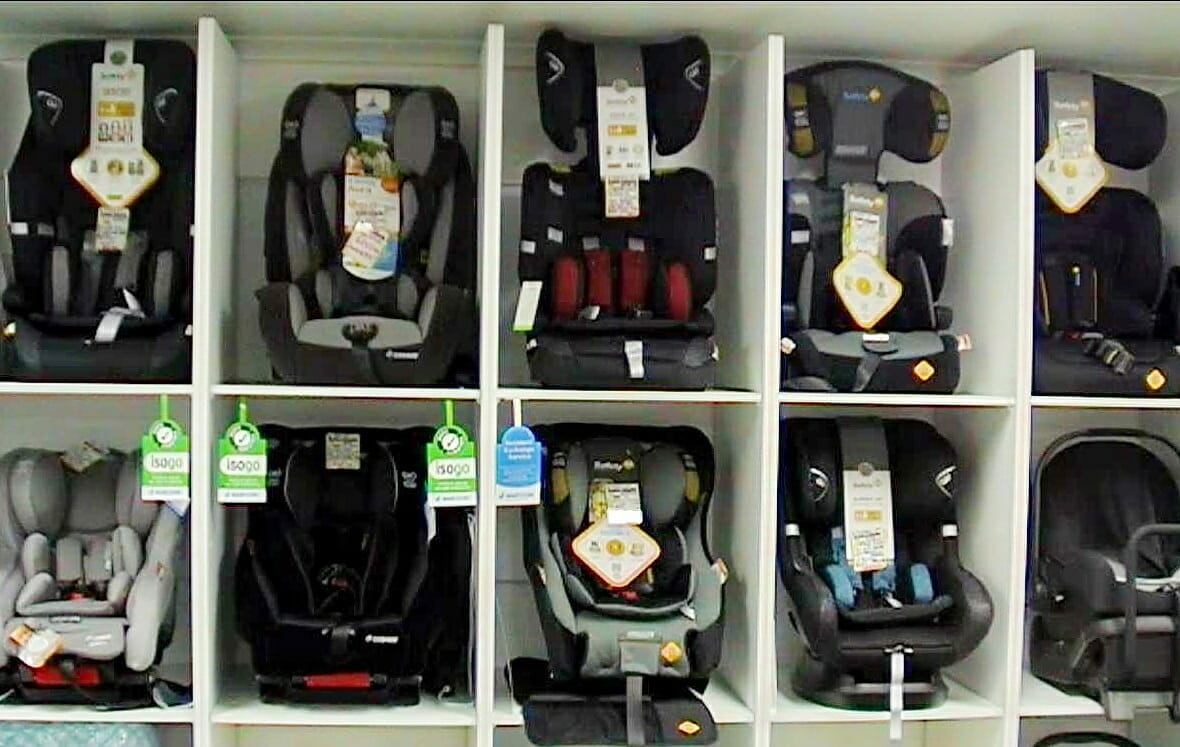
| Baby Capsules | Birth to approx. 6–12 months | Newborns and travel systems | Easy transfer between car and pram | Shorter usable lifespan |
| Convertible Car Seats | Approx. 6 months to 4 years | Long-term everyday use | Extended harness use | Some models are bulky in smaller cars |
| Booster Seats | Approx. 4–10 years | Older children | Correct adult seatbelt positioning | Child must meet height and maturity requirements |
| Birth-to-8 Car Seats | Birth to approx. 8 years | Families wanting one long-term seat | Long usable lifespan | May be larger in compact vehicles |
What Most Parents Don’t Realise
Many parents assume the biggest or most expensive restraint is automatically the safest option.
In reality, everyday usability and vehicle compatibility often matter just as much.
Some of the most common issues we see include:
- Large restraints reducing front passenger legroom
- Three-across seating becoming difficult with wider seats
- Incorrect harness adjustment
- Top tethers routed incorrectly
- Grandparents struggling to reinstall restraints correctly
- Families not planning ahead for additional children
Compact-fit restraints and easy-to-use systems can make everyday family life significantly easier while still maintaining excellent safety performance.
Is Professional Car Seat Fitting Really Needed?
Yes and no.
All child restraints include installation instructions, however many parents underestimate how different vehicle layouts, seatbelt systems and tether routing can affect installation quality.
Statistics regularly show that a very high percentage of child restraints are incorrectly installed or adjusted.
Incorrect harness tension, loose installations and incorrectly routed top tethers remain some of the most common child restraint issues seen in Australia.
Some families prefer having their restraint setup professionally checked for additional peace of mind, especially when installing their first capsule or fitting multiple seats across the back row.
Our team also offers child restraint fitting support in-store for families wanting help with setup and adjustment.
Do I Need To Keep Getting It Checked or Reinstalled?
The initial installation is only the beginning.
Many families remove and reinstall child restraints multiple times as they:
- Change vehicles
- Travel interstate
- Use grandparents’ cars
- Adjust seating layouts for growing families
That’s why at Bubs n Grubs, we focus not only on fitting the restraint correctly, but also helping parents understand proper everyday use and reinstall procedures.
Which Car Seat Should I Buy?
The best child restraint depends on:
- Your vehicle size
- Whether this is your first child
- Future family plans
- Whether you need to fit multiple restraints
- Your budget
- Front passenger legroom requirements
Vehicle fitment and everyday usability matter just as much as safety features on paper.
If you are unsure which restraint stage or size is right for your family, our finder tool can help narrow down suitable options based on your child, your vehicle and your long-term plans.
At Bubs n Grubs, our team works with child restraints every day and regularly helps families compare compact seats, extended rear-facing options and multi-seat vehicle layouts.
Should I Rent a Car Seat?
Generally, we do not recommend it.
While renting may appear economical initially, there is often no reliable way to verify:
- Crash history
- Storage conditions
- Previous misuse
- Missing components
That’s why Bubs n Grubs does not offer rental child restraints.
When it comes to child restraint safety, unknown history creates unnecessary risk.
Can I Place My Baby in the Front Seat if There’s an Airbag?
No.
Never install a rear-facing child restraint in front of an active airbag.
The safest position for children is generally the rear seat.
We do not install child restraints in front seating positions.
Do Booster Seats Need Professional Fitting?
Yes, booster seats still require correct installation and proper seatbelt positioning.
Incorrect shoulder belt positioning and poor lap belt placement remain common issues during the booster stage.
Correct fit becomes especially important as children transition away from harnessed restraints.
Pregnancy Seatbelt Safety
Do I Need To Wear a Seatbelt During Pregnancy?
Yes.
Wearing a correctly positioned seatbelt during pregnancy is required by law in Australia and is considered safer for both mother and baby.
How Should I Wear the Seatbelt While Pregnant?
Correct positioning is extremely important:
- Lap belt: Positioned low across the hips and upper thighs, underneath the belly
- Sash belt: Positioned between the breasts and over the shoulder
Never place the lap belt directly across the stomach.
In Summary
Every family’s situation is different.
The best child restraint for one vehicle or child may not be the best option for another.
That’s why personalised advice, proper fitment and real-world vehicle compatibility matter so much when choosing a child restraint.
At Bubs n Grubs, we help families compare restraints, understand installation basics and choose practical long-term solutions based on everyday Australian use.
Right now, we have excellent offers available on child restraints with the latest safety technology.
Standards & Guidance (Australia)
- Australian Standard: AS/NZS 1754
- QLD Government Child Restraint Guidance: Queensland Road Safety & Rules for Children
- Find an Accredited Fitter: ChildCarSeats.com.au
- General Safety Guidance: Kidsafe Queensland
FAQs
Do I really need a child restraint?
Yes. Child restraints are legally required in Australia and significantly improve child protection during a collision.
Should I have my car seat professionally checked?
Many families choose to have their installation checked professionally, especially when fitting their first capsule or using multiple child restraints.
How do I know which car seat is right for my vehicle?
Vehicle size, seating layout, legroom and future family plans all affect which restraint works best. Compact-fit options may suit smaller vehicles better.
Is it safe to use a second-hand car seat?
Second-hand restraints carry risks including unknown crash history, missing parts and expiry concerns. Parents should use caution.
When should my child move to a booster seat?
Children should remain in a harnessed restraint until they outgrow it by size according to the restraint’s height markers and limits.
Safety Disclaimer
This content is general information for Australia. Always follow the product manual and ensure your child restraint complies with AS/NZS 1754. Seek professional guidance specific to your vehicle and child where required.
About the Author
Frank is a founding owner of Bubs n Grubs. He is also the sole author of the Bubs n Grubs Baby Blog. He has been personally evaluating baby products & testing them before offering them to customers since 2009. In addition, he consistently provides manufacturer feedback, product development advice and real-world customer guidance based on in-store experience. Frank regularly works directly with families fitting child restraints and has been featured on The Morning Show & The Today Show as a recognised expert in baby products.

The Car Seat Mistake That Almost Cost One Brisbane Mum a New Car
A Brisbane mum with three young children came to us seeking a second opinion after being told she would likely need to buy a larger vehicle to fit three child restraints safely. The problem was she couldn’t afford one. Like many Australian families, she was already feeling the pressure of rising living costs. The thought
Read more...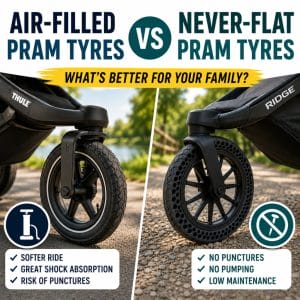
Air-Filled vs Never-Flat Pram Tyres: What’s Better for Australian Families?
Air-Filled vs Never-Flat Pram Tyres – What’s Better for Your Family? Most parents spend time comparing suspension, fold size and basket space when choosing a pram, but very few think about the tyres until after they start using it every day. The type of tyres your pram uses can make a huge difference to: Ride
Read more...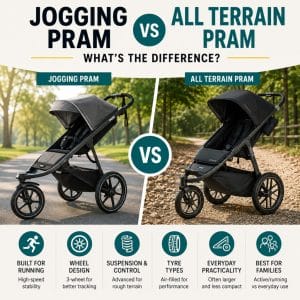
Jogging Pram vs All Terrain Pram: What’s the Difference?
Jogging Pram vs All Terrain Pram: What’s the Difference? Many parents searching for an all terrain pram eventually come across jogging prams and assume they are exactly the same thing. While both are designed to handle rougher terrain better than standard strollers, there are some important differences that can completely change which option is best
Read more...
What To Look For In An All Terrain Pram
What To Look For In An All Terrain Pram Choosing the right all terrain pram can make everyday life much easier, especially if you regularly walk on gravel paths, grass, parks, uneven footpaths or outdoor trails. Some prams are designed mainly for smooth shopping centre floors, while others are built to handle rougher terrain, jogging
Read more...






Leave a comment