
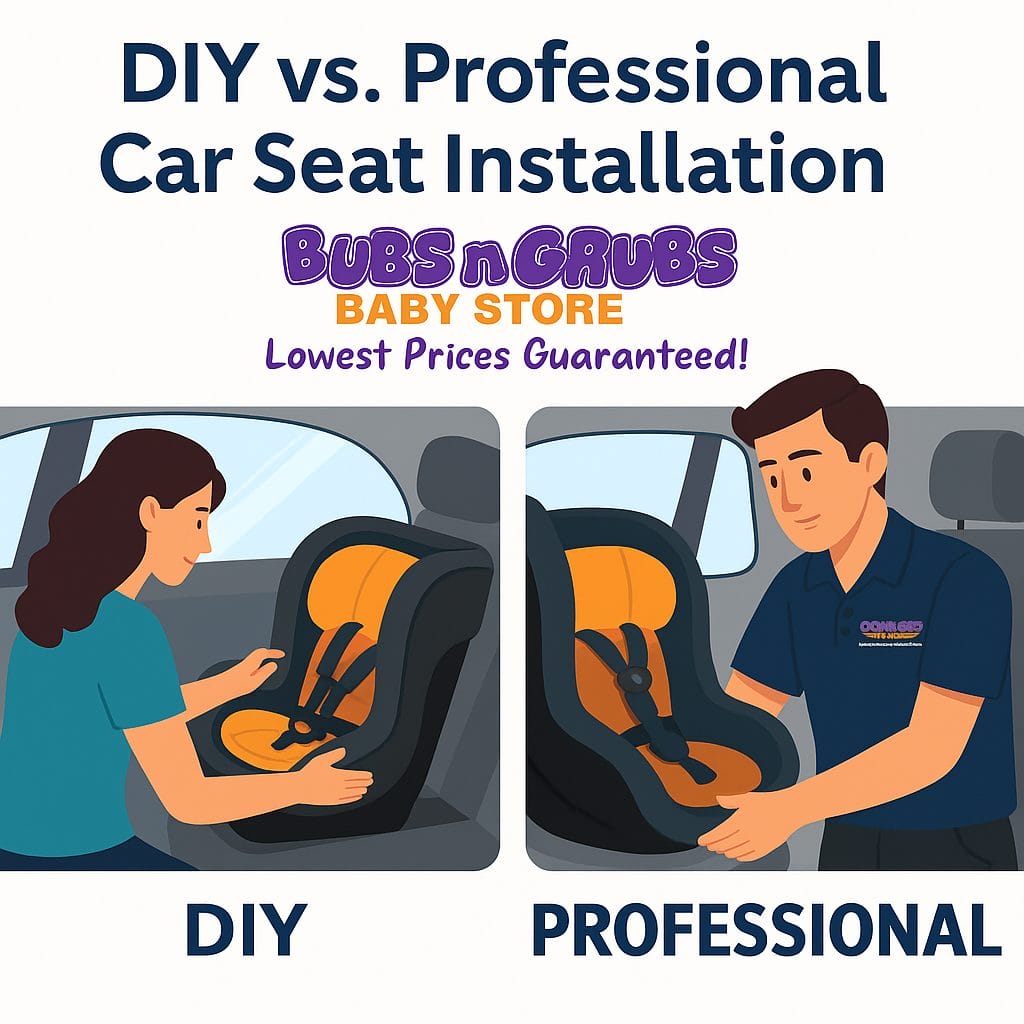
DIY vs Professional Baby Car Seat Installation: What Parents Should Know
Choosing whether to fit your own baby car seat or seek professional assistance is a common question for new parents. Correct restraint fitting, harness adjustment, top tether use and everyday checks all help protect your child in a crash. This guide explains when DIY fitting may be suitable, when professional child restraint fitting makes sense and what parents should check before every trip.
Why Correct Car Seat Fitting Matters
Even the safest baby car seat can fail to protect properly if it is not fitted, adjusted and used correctly. Installation errors can include loose seatbelt routing, incorrect ISOFIX use, loose harness tension, incorrect recline angle, missed top tether use or moving a child to the next stage too early.
Correct fitting helps the restraint work as the manufacturer intended. It also helps parents understand how to adjust the harness, check the seat position and keep the restraint secure during everyday use.
DIY Car Seat Fitting – When It May Be Appropriate
Some parents feel confident installing their own child restraint, especially if they carefully read the car seat manual and vehicle owner’s manual. DIY installation may be appropriate when:
- You have installed the same model of seat before and understand its fitting method.
- The restraint is compatible with your vehicle’s seatbelt path, top tether point or ISOFIX anchorages.
- You can achieve a tight, stable fit according to the manufacturer’s instructions.
- You understand your child’s height markers, harness position and rear-facing or forward-facing stage.
- You have previously had your fitting technique checked by a trained child restraint fitter.
Common Baby Car Seat Installation Mistakes
Even careful parents can make small mistakes that affect safety. Common child restraint fitting issues include:
- Seatbelt not locked or routed through the correct belt path.
- Top tether strap loose, twisted or attached to the wrong point.
- ISOFIX connectors not fully engaged.
- Harness too loose or positioned incorrectly for the child’s shoulders.
- Using unapproved accessories under or around the restraint.
- Moving from rear-facing to forward-facing too early.
- Installing the restraint at an incorrect recline angle.
When Professional Child Restraint Fitting Makes Sense
Professional fitting is worth considering when:
- It is your first time installing a baby capsule or car seat.
- You are changing stages from capsule to convertible seat or from harnessed seat to booster.
- Your vehicle has narrow seating positions, unusual seatbelt geometry or limited rear-seat space.
- You need to fit more than one restraint across the back seat.
- You are unsure whether to use ISOFIX or seatbelt installation.
- You want practical instruction on how to check and use the restraint every day.
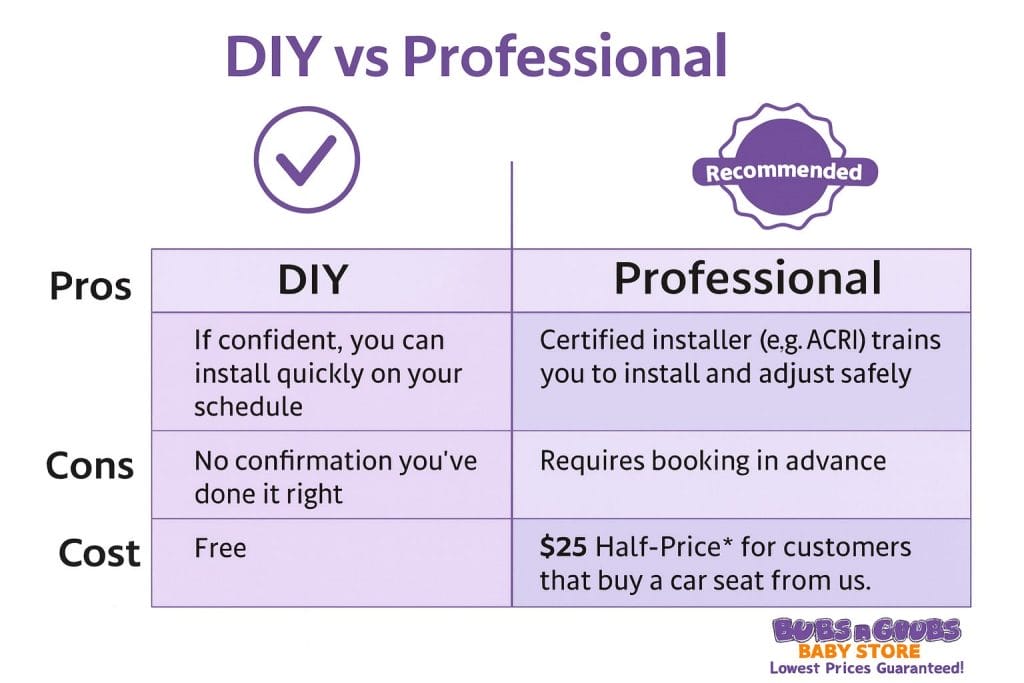
A trained fitter can check the installation, confirm the top tether and anchorage setup, explain harness adjustment and help you understand what to look for as your child grows.
What Professional Fitters Usually Check
A professional child restraint fitting should be more than simply placing the seat in the car. A proper check may include:
- Correct restraint choice for the child’s size, age and stage.
- Correct seatbelt, ISOFIX or top tether routing.
- Correct recline angle and vehicle seat position.
- Movement at the belt path.
- Harness height, harness tension and buckle position.
- Use of approved accessories only.
- Parent education on how to check the restraint after the fitting.
If you would prefer professional help, our ACRI-certified team offers professional car seat fitting in Brisbane from our Morningside baby store.
Do Car Seat Fitting Rules Vary by State?
Australia has national child restraint requirements, but state and territory guidance can vary slightly around wording, enforcement and penalties. Parents should always check their local road authority guidance and follow the restraint manufacturer’s manual.
You can check state and territory guidance here:
- Queensland
- New South Wales
- Victoria
- South Australia
- Western Australia
- Tasmania
- Northern Territory
- Australian Capital Territory
Questions To Ask Before Or During A Fitting
Before you rely on any child restraint installation, ask:
- Is this restraint suitable for my child’s current height and stage?
- Should this seat be rear-facing for longer?
- Is seatbelt or ISOFIX the better option in this vehicle?
- Where is the correct top tether anchorage point?
- How tight should the harness be?
- What should I check before every trip?
- When will my child outgrow this restraint?
Final Thoughts: Safe Fitting Is An Ongoing Job
Whether you choose DIY installation or professional fitting, the goal is the same: your child restraint must be correctly installed, correctly adjusted and correctly used every trip.
Parents should recheck the restraint regularly, especially after cleaning, moving the seat, changing vehicles or adjusting the harness. If you are unsure, get the installation checked by a trained child restraint fitter.
FAQs: DIY vs Professional Car Seat Installation
Is professional car seat fitting worth it?
Yes. Professional fitting can help reduce installation errors and gives parents practical guidance on harness adjustment, top tether use and everyday safety checks.
Can I install a baby car seat myself?
Many parents install their own child restraint, but it is important to follow both the restraint manual and vehicle owner’s manual. If you are unsure, have the installation checked by a trained fitter.
What are common car seat installation mistakes?
Common mistakes include loose seatbelt routing, incorrect top tether use, harness straps that are too loose, incorrect recline angle and moving a child to the next stage too early.
Do you teach parents how to check the seat after fitting?
Yes. A good professional fitting should include practical education so parents understand how to check harness tension, top tether use and restraint movement.
Do fitting rules vary across Australia?
The core child restraint requirements are national, but state and territory guidance, wording and penalties can vary. Always check your local road authority’s current advice.
Safety Disclaimer
This content is general information for Australia. Always follow the child restraint manual, your vehicle owner’s manual, Australian Standards (AS/NZS 1754) and current state or territory road rules. For advice about your specific vehicle, child and restraint, speak with a trained child restraint fitter.
About the Author
Frank is the founding owner of Bubs n Grubs and the sole author of the Bubs n Grubs Baby Blog. He has personally tested and evaluated baby products and car seats sold in store since 2009, provides feedback to manufacturers and is a certified ACRI child restraint fitter. Frank has been featured on Channel 7’s Morning Show and Channel 9’s Today Show as a recognised expert in baby products.

The Car Seat Mistake That Almost Cost One Brisbane Mum a New Car
A Brisbane mum with three young children came to us seeking a second opinion after being told she would likely need to buy a larger vehicle to fit three child restraints safely. The problem was she couldn’t afford one. Like many Australian families, she was already feeling the pressure of rising living costs. The thought
Read more...
Air-Filled vs Never-Flat Pram Tyres: What’s Better for Australian Families?
Air-Filled vs Never-Flat Pram Tyres – What’s Better for Your Family? Most parents spend time comparing suspension, fold size and basket space when choosing a pram, but very few think about the tyres until after they start using it every day. The type of tyres your pram uses can make a huge difference to: Ride
Read more...
Jogging Pram vs All Terrain Pram: What’s the Difference?
Jogging Pram vs All Terrain Pram: What’s the Difference? Many parents searching for an all terrain pram eventually come across jogging prams and assume they are exactly the same thing. While both are designed to handle rougher terrain better than standard strollers, there are some important differences that can completely change which option is best
Read more...
What To Look For In An All Terrain Pram
What To Look For In An All Terrain Pram Choosing the right all terrain pram can make everyday life much easier, especially if you regularly walk on gravel paths, grass, parks, uneven footpaths or outdoor trails. Some prams are designed mainly for smooth shopping centre floors, while others are built to handle rougher terrain, jogging
Read more...








Leave a comment