
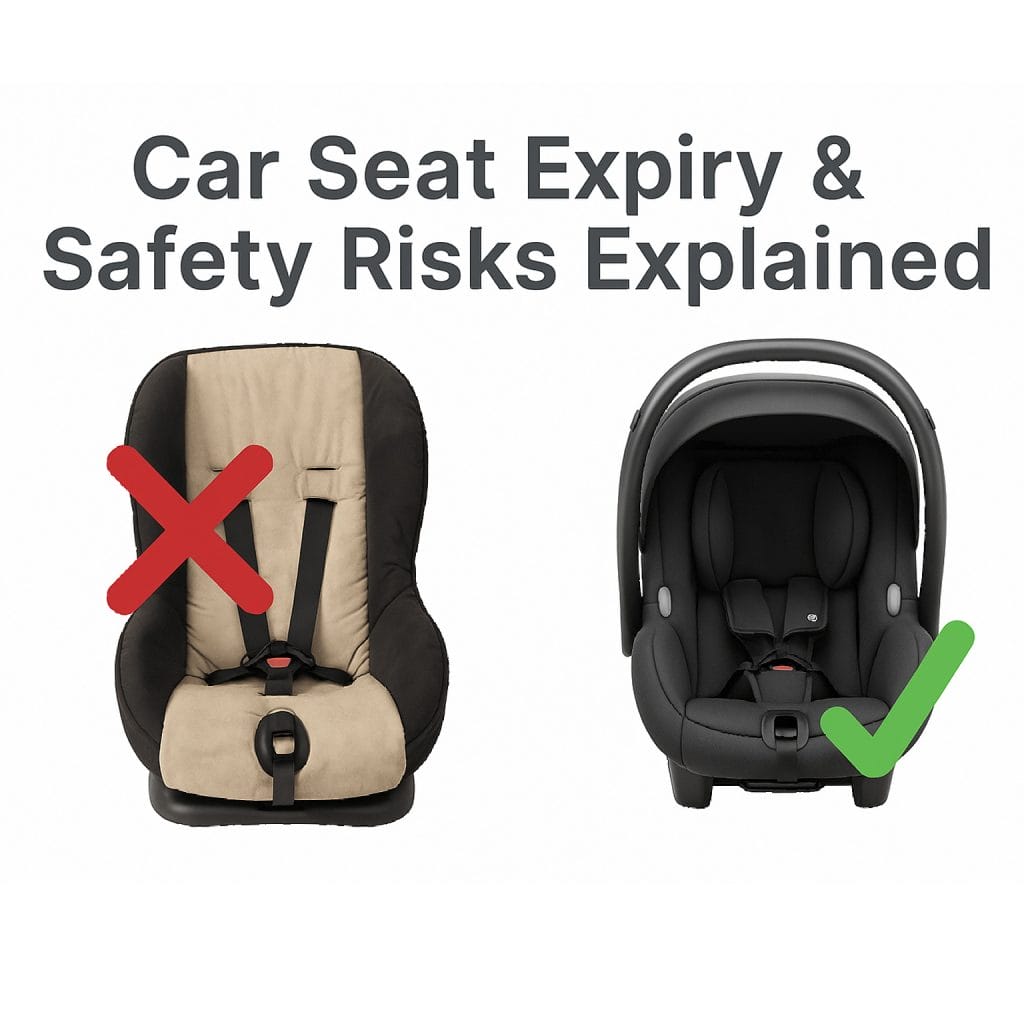
Car Seat Expiry, Recalls & Second-Hand Risks in Australia
Car seat expiry, recalls and second-hand restraint risks are critical topics that every Australian parent should understand before using a child restraint. Baby car seats do not last forever. Over time, materials degrade, safety standards evolve and hidden damage can turn a cheap second-hand seat into a major safety risk. Organisations including the ACCC, Raising Children Network and Kidsafe all recommend caution when using expired, recalled or unknown-history child restraints.
As ACRI-trained and certified child restraint fitters, the team at Bubs n Grubs regularly sees parents unknowingly using expired restraints, incorrectly installed seats or second-hand models with missing parts and unknown crash history.
Below we explain how car seat expiry works in Australia, how to check for recalls and why second-hand restraints carry significant risks.
Car Seat Expiry Dates – Why They Matter
- Most Australian child restraints have a recommended useful life of approximately 10 years from the date of manufacture.
- Heat, UV exposure, age and repeated use can weaken plastics, webbing and internal components over time.
- Manufacture dates and expiry guidance are usually moulded into the shell or printed on product labels.
- Older restraints may no longer reflect current Australian safety expectations or product improvements.
Tip: Always check the manufacture date before using a restraint, especially if it has been stored in a garage, handed down through family or purchased second-hand.
In Australia, child restraints should not be used beyond the manufacturer’s recommended useful life, even if they appear undamaged. Plastic, webbing and structural components can degrade over time, reducing crash protection performance.
How To Check a Car Seat Expiry Date
Parents should check both the shell and labels on the restraint for:
- Date of manufacture
- Recommended useful life or expiry date
- Australian Standards approval markings
- Model information and batch details
If labels are missing, damaged or unreadable, the restraint may no longer be suitable for safe use.
Car Seat Recalls & Accident History
Car Seat Recalls
The ACCC Product Safety Recalls database lists official child restraint recalls in Australia.
Recalls may involve:
- Buckles
- Harness systems
- Top tether components
- Shell strength issues
- Installation hardware
If your restraint is affected by a recall, follow the manufacturer’s instructions immediately and stop using the seat if advised.
Accident History
If a child restraint has been involved in a crash, internal damage may not always be visible.
The Kidsafe Network and many manufacturers recommend replacing restraints after moderate or severe crashes because hidden structural damage can reduce protection in future collisions.
Some brands also offer accident replacement programs for registered customers.
The Hidden Risks of Buying Second-Hand Car Seats
Second-hand child restraints sold on Facebook Marketplace, Gumtree and similar platforms may appear cheap, but the risks are often impossible to verify.
- Unknown crash history – hidden internal damage may not be visible.
- Expired restraints – many used seats are already near or beyond their recommended useful life.
- Missing parts or manuals – incomplete restraints can become unsafe.
- Unknown storage conditions – garages and hot vehicles can accelerate material degradation.
- No warranty support – manufacturer support and accident replacement programs may not apply.
- Recall uncertainty – you may not know whether the restraint was repaired or updated correctly.
When it comes to child restraint safety, unknown history creates unnecessary risk.
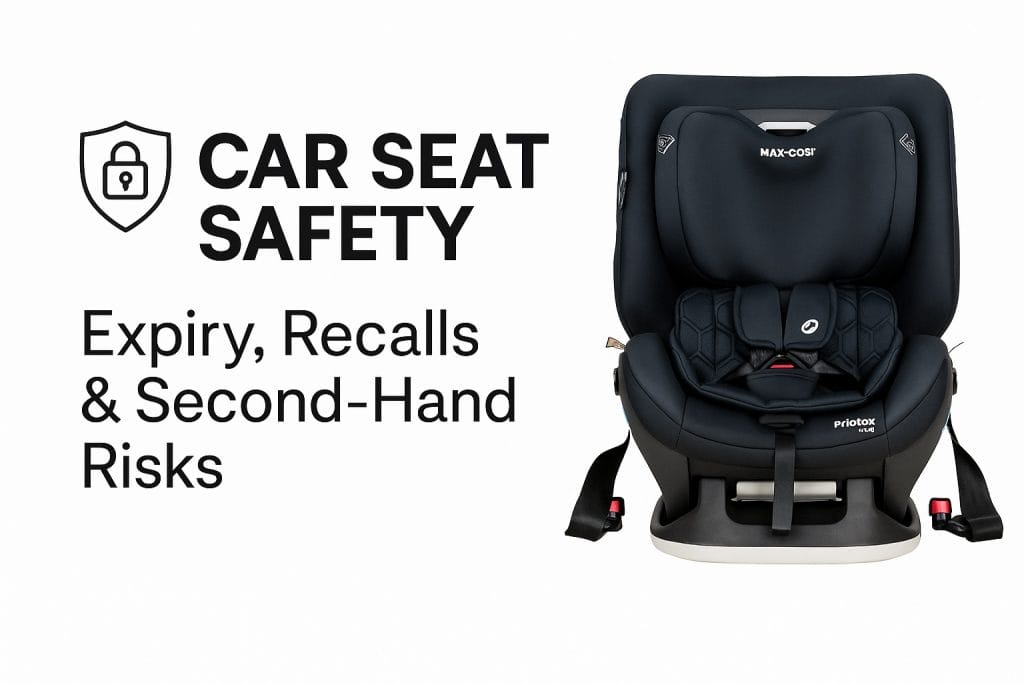
Why Correct Installation Still Matters
Even the safest child restraint can perform poorly if it is incorrectly installed.
Loose belt paths, incorrect top tether routing, twisted harnesses and incorrect recline angles are still common problems seen by professional fitters.
If you would like assistance setting up your restraint correctly, our team also offers professional car seat fitting in Brisbane by ACRI-certified installers.
What Parents Should Do Instead
- Buy new from an authorised Australian retailer.
- Check recall notices directly on the ACCC website.
- Register your restraint with the manufacturer if available.
- Check manufacture dates before use.
- Ensure correct installation and harness adjustment.
- Learn proper everyday use including harness tightening and top tether checks.
Final Thoughts: Child Restraint Safety Comes First
Your child’s car seat is one of the most important safety purchases you will ever make.
Expiry dates, recalls and second-hand risks are not minor details. They directly affect how a restraint performs during a crash.
Choosing the right restraint, installing it correctly and maintaining it properly all play a role in keeping your child safer on the road.
At Bubs n Grubs, we combine trusted advice, compliant Australian child restraints and professional fitting support to help parents make safer decisions with confidence.
Shop Baby Car Seats now with full Australian warranty support and installation assistance.
FAQs: Car Seat Expiry and Recalls Australia
Do car seats expire in Australia?
Most Australian child restraints have a manufacturer-recommended useful life, commonly around 10 years from the date of manufacture. Always check your restraint labels and manual.
Where do I check for car seat recalls in Australia?
You can check child restraint recalls through the ACCC Product Safety Australia recalls database and the manufacturer’s Australian support pages.
Is it safe to buy a second-hand car seat?
Second-hand child restraints carry risks including unknown crash history, missing parts, expired materials and recall uncertainty. Parents should use caution before using any unknown-history restraint.
Should I replace a car seat after a crash?
Many manufacturers and safety organisations recommend replacing child restraints after moderate or severe crashes because hidden internal damage may reduce future crash protection.
Can professional fitting help improve child restraint safety?
Yes. Professional fitting can help ensure the restraint is installed correctly, adjusted properly and suitable for your child and vehicle.
Safety Disclaimer
This content is general information for Australia. Always follow your child restraint manual, Australian Standards (AS/NZS 1754), manufacturer instructions and current road authority guidance. For advice specific to your child, restraint or vehicle, speak with a qualified child restraint fitter.
About the Author
Frank is a founding owner of Bubs n Grubs. He is also the sole author of the Bubs n Grubs Baby Blog. He has been personally evaluating baby products & testing them before offering them to customers since 2009. In addition, he consistently provides manufacturer feedback, product development advice and real-world customer guidance based on in-store experience. Frank has been featured on The Morning Show & the Today Show on Channel 7 and Channel 9 and is recognised as an expert in baby products.

The Car Seat Mistake That Almost Cost One Brisbane Mum a New Car
A Brisbane mum with three young children came to us seeking a second opinion after being told she would likely need to buy a larger vehicle to fit three child restraints safely. The problem was she couldn’t afford one. Like many Australian families, she was already feeling the pressure of rising living costs. The thought
Read more...
Air-Filled vs Never-Flat Pram Tyres: What’s Better for Australian Families?
Air-Filled vs Never-Flat Pram Tyres – What’s Better for Your Family? Most parents spend time comparing suspension, fold size and basket space when choosing a pram, but very few think about the tyres until after they start using it every day. The type of tyres your pram uses can make a huge difference to: Ride
Read more...
Jogging Pram vs All Terrain Pram: What’s the Difference?
Jogging Pram vs All Terrain Pram: What’s the Difference? Many parents searching for an all terrain pram eventually come across jogging prams and assume they are exactly the same thing. While both are designed to handle rougher terrain better than standard strollers, there are some important differences that can completely change which option is best
Read more...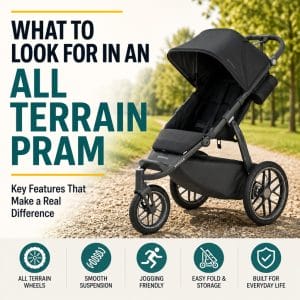
What To Look For In An All Terrain Pram
What To Look For In An All Terrain Pram Choosing the right all terrain pram can make everyday life much easier, especially if you regularly walk on gravel paths, grass, parks, uneven footpaths or outdoor trails. Some prams are designed mainly for smooth shopping centre floors, while others are built to handle rougher terrain, jogging
Read more...








Leave a comment