


What Kind of Pram Wheels Are Best? Real-World Pros & Cons
One of the most common questions we hear from parents is:
“What kind of pram wheels are best?”
The short answer is that it depends on how and where you plan to use your pram most often.
If you regularly walk on rough terrain or plan to jog, larger rubber wheels may be ideal. If you mostly use your pram in shopping centres and urban environments, lightweight wheels may be more practical.
If you’re unsure which wheel setup best suits your terrain, travel needs or everyday routine, our free Pram Finder can help narrow the best options for your family.
When buying any pram or stroller, ensure it complies with the Australian Standard AS/NZS 2088:2022 – Prams and Strollers – Safety Requirements.
Common Pram and Stroller Wheel Types

Rubber Pneumatic Pram Wheels
- Air-filled for maximum comfort and shock absorption.
- Excellent grip for jogging and rough terrain.
- Provide one of the smoothest rides over gravel, parks and uneven footpaths.
- Usually found on larger all terrain and jogging prams.
- Require occasional maintenance and pressure checks.
Rubber pneumatic tyres are often preferred by active families regularly using outdoor walking areas, rough terrain or jogging paths.
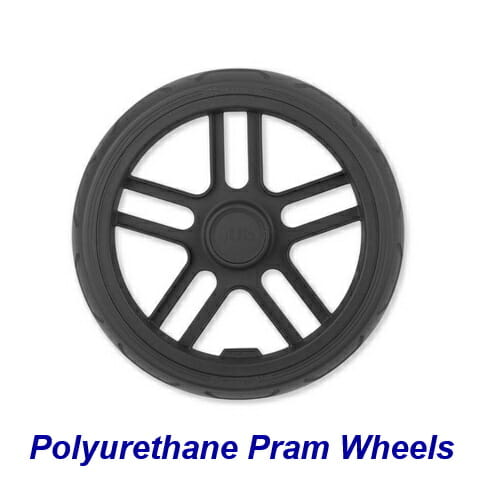
Polyurethane (PU) Pram and Stroller Wheels
- Foam-filled and puncture-proof.
- Require less maintenance than air-filled tyres.
- Good balance between comfort and practicality.
- Often smoother and quieter than harder EVA wheels.
- Popular for mixed indoor and outdoor family use.
Many parents find PU wheels offer a good balance between outdoor performance and everyday practicality.
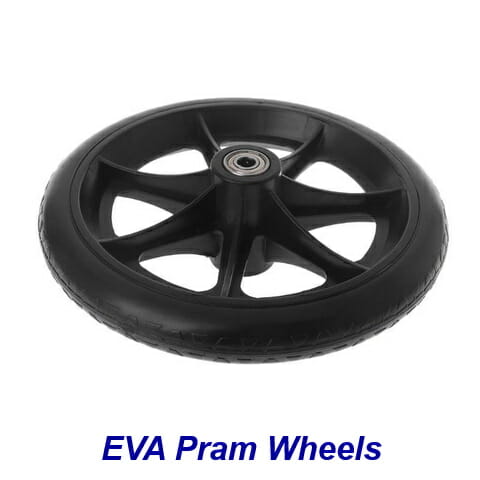
EVA Pram and Stroller Wheels
- Lightweight and cost-effective.
- Common on compact travel prams and lightweight strollers.
- Ideal for shopping centres, cafés and smooth indoor surfaces.
- Harder wheel material can create a bumpier ride outdoors.
- Usually easier to lift because the pram itself is often lighter.
EVA wheels are often chosen by parents prioritising compact fold size, portability and lightweight handling.
Aerotech Wheels
- Blend of EVA and rubber characteristics.
- Hollow design provides some cushioning without air filling.
- Puncture-proof and lower maintenance.
- Lighter than traditional pneumatic tyres.
- Ride comfort generally sits between EVA and full rubber tyres.
Aerotech wheels can suit families wanting a compromise between comfort, maintenance and overall weight.
What Most Parents Don’t Realise
Wheel type dramatically changes how a pram feels in real life.
Larger terrain-focused wheels may feel smoother outdoors but can also:
- Increase overall pram weight
- Take up more boot space
- Make the pram larger when folded
- Feel bulkier in tighter shopping environments
At the same time, lightweight compact wheels may feel easier to lift and travel with but become frustrating on rough footpaths, grass or gravel.
This is why the “best” wheel type really depends on your everyday use rather than simply choosing the biggest wheels available.
Wheel Type Comparison Table
| Feature | Rubber Pneumatic | Polyurethane (PU) | EVA | Aerotech |
|---|---|---|---|---|
| Best for Jogging/Running | ✔ | ✘ | ✘ | ✘ |
| Puncture Proof | ✘ | ✔ | ✔ | ✔ |
| Ride Comfort on Rough Terrain | Excellent | Good | Lower | Moderate |
| Weight | Heavier | Light | Lightest | Light |
| Grip on Rough Surfaces | Excellent | Good | Lower | Moderate |
| Maintenance Required | Higher | Low | Low | Low |
If you’re unsure which wheel setup best suits your terrain, travel needs and everyday use, our free Pram Finder can help compare the best options for your family.
Summary
No one wheel type is ideal for every family.
For jogging and rough outdoor terrain, rubber pneumatic tyres usually provide the best comfort and grip.
For mixed indoor and outdoor use, polyurethane wheels often offer an excellent balance between comfort and practicality.
For lightweight travel prams and compact city use, EVA wheels may suit families prioritising portability and easier lifting.
Aerotech wheels sit somewhere between EVA and rubber, offering a compromise between comfort, maintenance and weight.
At Bubs n Grubs, all prams are handpicked based on real-world parenting needs, Australian Standards compliance and long-term practicality.
Need expert advice? Our trained team can help compare wheel types and recommend the best setup for your family in store or over the phone.
About the Author
Frank is a founding owner of Bubs n Grubs. He is also the sole author of the Bubs n Grubs Baby Blog. He has been personally evaluating baby products & testing them before offering them to our customers since 2006. In addition, he is consistently giving manufacturer’s feedback & product development advice, reviewing & getting customer feedback. He has been doing this since the business started in 2006. He is proud to be one of the rare baby store owners who regularly engages with customers in store. Frank values the constant feedback and regularly seeks it out. He has been featured on the Morning Show & the Today Show on Channel 7 and Channel 9 and is a recognised expert in baby products as a result.