


Car Seat Safety in Australia: Why Fit Beats Age Rules
When it comes to car seat safety in Australia, the law sets minimum age milestones for child restraints – but your child’s size and fit should determine when you switch seats. This guide explains how to make safer, standards-aligned transitions from rear-facing to forward-facing, forward-facing to booster and booster to adult seatbelt using practical fit checks designed for Australian families.
Quick Take on Car Seat Safety in Australia
- Meet the law, exceed with fit: Legal minimums are just that – minimums. Keep your child in the most protective stage until they outgrow it by size, not by birthday.
- Rear-facing for longer is safer: Keep children rear-facing until they reach the restraint’s upper height marker or weight limit.
- Harness until it no longer fits: Move to a booster only when the harness no longer fits correctly by size.
- Booster to adult seatbelt: Only transition once the seatbelt fits properly without slumping or belt rub.
Why Age Rules Aren’t Enough in Car Seat Safety Australia
Australian road rules provide minimum legal ages for restraint types, but children vary significantly in height, torso length and overall size. A tall four-year-old with a long torso may outgrow a harnessed seat earlier than a smaller child the same age.
That is why AS/NZS 1754-certified restraints use height markers, shoulder markers and weight limits – and why fit checks are more reliable than birthdays alone.
Correct installation is also critical. Even a premium child restraint can perform poorly if the harness, top tether or belt path are not adjusted correctly.
If you would like assistance checking your restraint setup, our team also offers professional child restraint fitting in Brisbane by ACRI-certified installers.
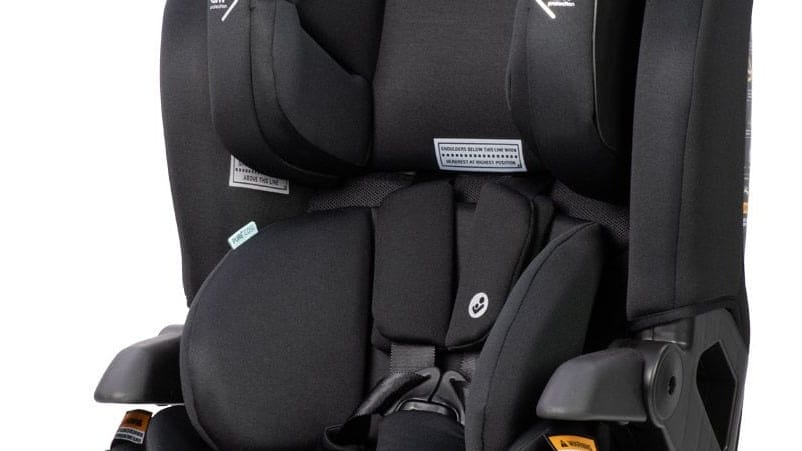

How to Check Harness Fit (Forward-Facing)
- Shoulder height: For a forward-facing harness, straps should be at or above the shoulders. If your child’s shoulders sit above the highest slot or height marker, the harness no longer fits.
- Snug chest fit: Harness straps should lie flat and snug without slack.
- Head position: The head must remain within the approved headrest or shell area defined by the restraint manual and labels.
- Correct recline and routing: Belt paths, top tether routing and recline angle should always follow manufacturer instructions.
When to Move: Rear-Facing to Forward-Facing
Keep your child rear-facing until they reach the restraint’s upper height marker or weight limit.
Transition only when:
- Eye level reaches the rear-facing upper height marker.
- The seat’s rear-facing weight limit has been exceeded.
- You can no longer achieve a safe installation at the approved recline angle.
Tip: Many Australian car seats support extended rear-facing, which provides improved support for the head, neck and spine during a collision.
When to Move: Forward-Facing Harness to Booster
Continue using a harnessed forward-facing seat until your child has genuinely outgrown it by size:
- Shoulders above the top harness slot or upper height marker.
- Exceeding the restraint’s approved weight limit.
- Harness can no longer be adjusted correctly.
Only then move to a booster with lap-sash seatbelt. Your child should also be mature enough to remain seated upright for the entire trip.
When to Move: Booster to Adult Seatbelt
Use the 5-Step Seatbelt Fit Test. Your child is only ready to move out of a booster once all five checks pass in every vehicle:
- Back sits against the vehicle seatback.
- Knees bend naturally at the seat edge.
- Lap belt sits low across the tops of the thighs.
- Shoulder belt sits across the shoulder and chest.
- Child remains correctly seated for the entire trip.


Common Car Seat Safety Myths
- “They turned four, so it’s booster time.” Not if the harness still fits correctly by size.
- “Legs look cramped rear-facing.” Bent legs are not unsafe when the child remains within the restraint’s limits.
- “Bigger seat means safer seat.” The safest restraint is the one that fits your child, vehicle and stage properly.
- “All car seats fit all vehicles.” Vehicle size and seating geometry can dramatically affect installation quality.
How to Choose the Next Car Seat
- Check the restraint labels and manual: Follow height markers and approved limits.
- Measure your child: Standing height and torso height matter.
- Check fit in your vehicle: Seat geometry and front-seat space can affect installation.
- Prioritise ease of use: Harness adjustment and correct daily use matter long term.
- Get installation checked: Professional fitters can help confirm correct setup.
Need help choosing? Browse our Baby Car Seats category and speak with our trained team.
Australian Standards & Guidance
- Queensland Government – Child restraints & road safety
- Product Safety Australia – Consumer product safety
- Kidsafe Queensland
Final Thoughts: Prioritising Protection Over Birthdays
Every journey deserves the highest level of protection for your child.
At Bubs n Grubs, we help families choose child restraints based on correct fit, long-term usability and real-world vehicle compatibility – not just age labels alone.
Choosing the right restraint stage, using the correct fit checks and ensuring proper installation all play an important role in improving child restraint safety.
Explore our latest range of Baby Car Seats and compare safer options for your child’s stage and vehicle.
Expert Help When You Need It
Come and see us in-store at 4 / 229 Junction Road, Morningside QLD 4170 or call (07) 3902 1350. Prefer to shop from home? Our full range is available online 24/7.
FAQs: Size-Based Car Seat Transitions
Is it legal to keep my child rear-facing past 12 months?
Yes. Children can remain rear-facing provided they are still within the restraint’s rear-facing height and weight limits.
When should I move from a harnessed seat to a booster?
Only once the harness no longer fits correctly by size and your child can remain seated upright for the entire trip.
How do I know when my child no longer needs a booster?
Your child should pass the 5-Step Seatbelt Fit Test in every vehicle they travel in.
Do tall children outgrow car seats faster?
Yes. Height and torso length can outgrow a restraint before the child reaches the weight limit.
Can professional fitting help improve car seat safety?
Yes. Professional fitting helps ensure the restraint is installed correctly and adjusted properly for your child and vehicle.
Safety Disclaimer
This content is general information for Australia. Always follow the product manual, Australian Standards and current road authority guidance. Seek professional advice for your child’s specific restraint and vehicle setup.
About the Author
Frank is a founding owner of Bubs n Grubs. He is also the sole author of the Bubs n Grubs Baby Blog. He has been personally evaluating baby products & testing them before offering them to our customers since 2006. In addition, he is consistently giving manufacturer’s feedback & product development advice, reviewing & getting customer feedback. He has been doing this since the business started in 2006. He is proud to be one of the rare baby store owners who regularly engages with customers in store. Frank values the constant feedback and regularly seeks it out. He has been featured on the Morning Show & the Today Show on Channel 7 and Channel 9 and is a recognised expert in baby products as a result.